

The AKF AI Maturity Framework for Product Operations
The Year We Stopped Reinventing the Wheel
Before I was a Principal Consultant at AKF, I spent the better part of two decades running Program and Project Management Offices, most recently as a VP of Program Management and PMO for an organization. If you have ever led a PMO, you know the pattern: give a room full of smart, motivated project managers a shared goal and a blank canvas, and within a year you will have a dozen different spreadsheets, a different status-report formats, and multiple definitions of "on track."
Every one of those spreadsheets represented someone's real ingenuity. A Project Manager who built a good Risk-Assumptions-Issues-Dependencies (RAID) log or a PM who figured out a cleaner way to roll up milestones for the executive team. None of it was wrong. It just was not shared. And because it wasn't shared, new hires reinvented the same tools, executives got five versions of the same concept in a single steering committee meeting, and the best ideas stayed trapped inside the heads of the people who came up with them.
Standardizing that PMO one intake process, one set of templates, one shared language for status, risk, and prioritization was some of the least glamorous work I have ever done, and also some of the most valuable. It did not slow anyone down. It lets the whole team move at the speed of our best practices instead of our average ones.
That experience is exactly why the Standardized level of the AKF AI Maturity Framework is the one I get the most excited about. It's the structural work that turns scattered AI wins into an actual competitive edge.
This blog examines what that shift looks like when a product organization decides to make it. This blog also builds on two earlier pieces worth reading alongside it: 5 Levels of AI-Assisted Product Ops – Where Is Your Organization?, and my previous blog post on level 2 “The Experimental Level”; Building Product Teams That Learn Faster With AI: The Experimental Level. This post is the next in sequence where that one leaves off, "level 3 Standardization".
A Quick Map: The Five Levels and Five Dimensions
The AKF framework scores product organizations across five maturity levels and five product dimensions. Here's a high level version of the five levels for the full breakdown of each, see the framework overview 5 Levels of AI-Assisted Product Ops – Where Is Your Organization?
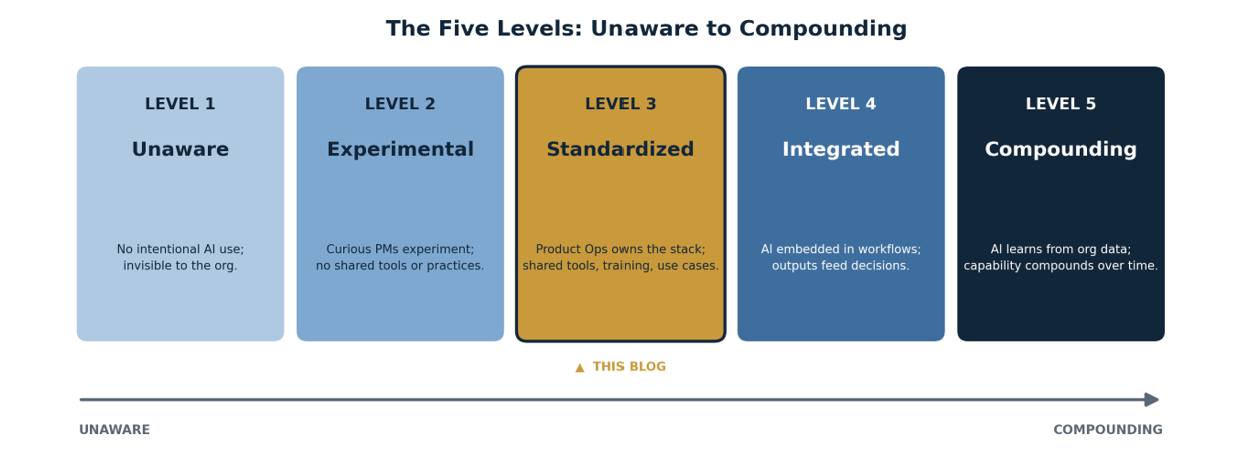 Figure 1. The five maturity levels, from no intentional AI use to a self-reinforcing, compounding capability.
- Level 1 - Unaware: No intentional AI use in product ops; if it is happening, it's invisible to the organization.
- Level 2 - Experimental: Curious PMs get real value from AI on their own; nothing is shared, trained, or repeatable.
- Level 3 - Standardized: Product Operations owns the stack, shared tools, defined use cases, and trained PMs. (This blog post.)
- Level 4 - Integrated: AI is built into core workflows, and its outputs feed directly into decisions.
- Level 5 - Compounding: AI learns from the organization's own data, and the product organization improves faster with it than without it.
The Five Dimensions
Maturity is measured across five dimensions of product operations, and organizations are rarely even across all five, it's common to be far along in one and just getting started in another.
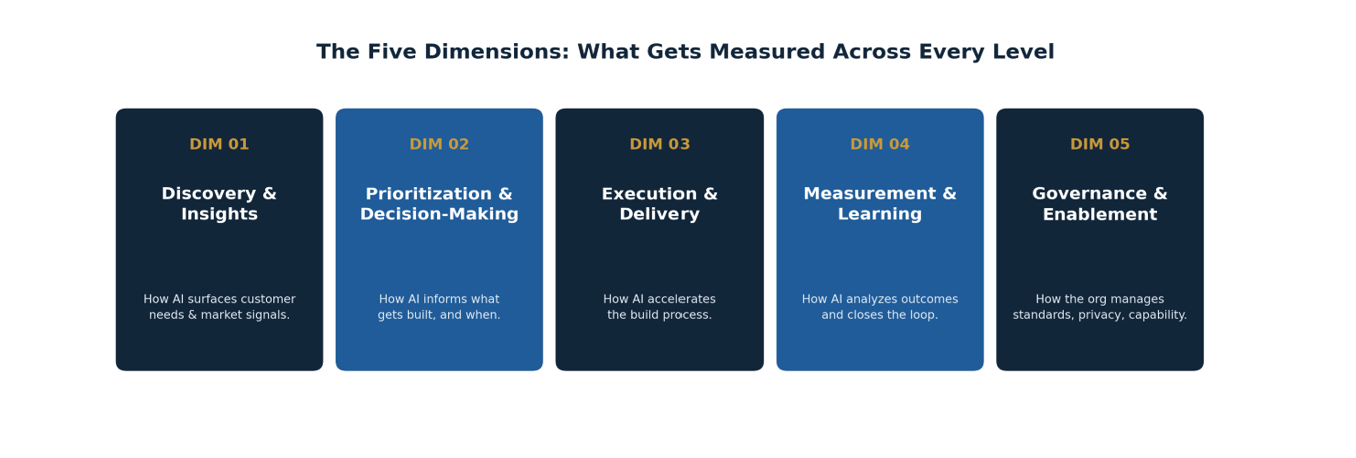 Figure 2. The five dimensions the framework evaluates at every maturity level.
- Discovery & Insights - how AI helps surface customer needs, market signals, and usage patterns.
- Prioritization & Decision-Making – the way AI informs and defends what gets built, and when.
- Execution & Delivery - AI's role in speeding up the turn from decisions into specifications and shipped work.
- Measurement & Learning - AI analyzing outcomes and closing the loop between release and insight.
- Governance & Enablement – how the organization manages standards, data privacy, and PM capability.
The Standardized Level: Why It Matters
If Experimental proves the value is real, Standardized is the point where an organization decides that value is worth building a lasting structure around. This is the moment Product Operations stops being a spectator to individual AI habits and starts being the owner of a shared practice.
What changes is who benefits. At Level 3 Standardization, what changes is not the enthusiasm, but who benefits from it. At Level 2 Experimental, only the curious PM gets the productivity gain. At Level 3, every PM does, because the tooling is approved, the prompts are tested and shared, the templates are built for AI-assisted work from the start, and new hires are trained on all of it during onboarding instead of discovering it by accident several months later.
This is also the level where an organization can finally answer questions it could not answer at Level 2: Which AI tools are we actually using? What does "good" AI-assisted output look like, and who checks it? If a top performer leaves tomorrow, does their AI-assisted practice leave with them? Standardization turns individual knowledge into shared capability, so consistent performance no longer depends on who is in the room.
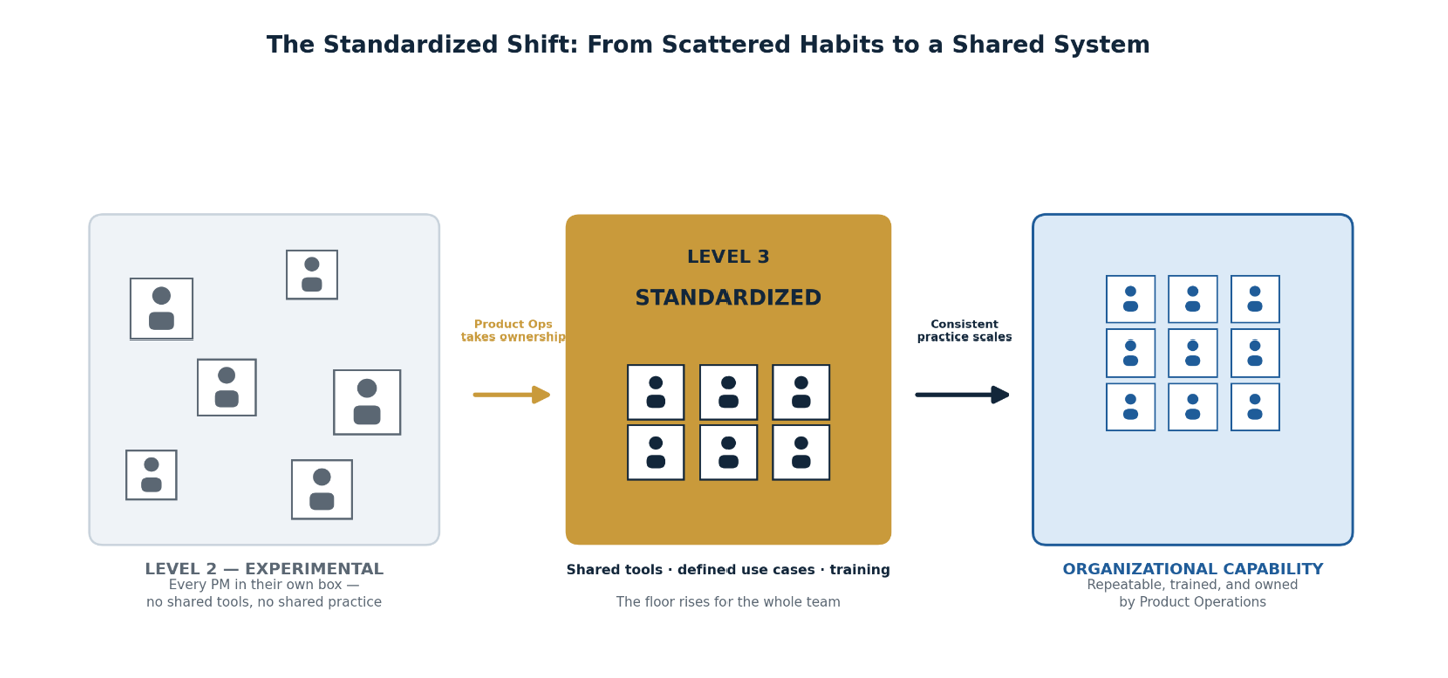
Figure 3. The Standardized shift: Product Operations takes scattered individual habits and turns them into one shared, trained practice.
How Level 3 Standardized Shows Up Across Each Dimension
Individual AI wins create momentum, but shared systems create lasting impact. Following is what standardization actually looks like in practice across the dimensions, along with a representative AI integration example for each.
01 Discovery & Insights
How AI surfaces customer needs, market signals, and usage patterns
At Standardized, discovery synthesis stops depending on which PM happens to be curious. Product Operations defines an approved workflow for turning interview transcripts, support tickets, and customer comments from Net Promoter Score (NPS) surveys into themes", publishes a shared prompt library for doing it, and gives the whole team one place to see the output. The result is not just faster synthesis; it is synthesis that different teams can actually compare to one another.
|
Practice |
Impact |
AI Integration Example |
|
Product Operations publishes a standard, tested workflow and prompt set for processing customer interviews and support tickets through an approved AI tool and trains every PM on it. A shared repository centralizes the themes that come out, tagged consistently across product areas. |
Discovery output becomes comparable across teams for the first time, a theme surfaced in one product line can be checked against another. New PMs are productive on synthesis in their first week instead of their first year. Customer evidence becomes a shared organizational asset instead of one person's private notes. |
Product Operations rolls out an approved “Discovery Synthesis” prompt template and a shared feedback repository. Every PM now runs the same weekly process: export the week's tickets and interview notes, run the standard prompt, and log the themes to the shared repository with the standard tags. A pattern that used to surface only if the right PM happened to notice it now surfaces automatically, because everyone is looking at the data the same way. |
02 Prioritization & Decision-Making
How AI augments or informs what gets built and when
At Level 2 Experimental, a handful of PMs used AI to stress-test their own roadmap arguments. At Level 3 Standardization, that stress test becomes everyone's default. Product Operations builds shared scoring templates, a common evidence-packet format, and a prompt library for surfacing counterarguments, so every proposal that reaches a planning review has been through the same rigor, not just the proposals from the PMs who happened to think of it.
|
Practice |
Impact |
AI Integration Example |
|
Product Operations publishes shared RICE (Reach, Impact, Confidence, Effort) scoring templates with AI-assisted estimate generation, a standard “evidence packet” format summarizing customer signal and risk for each initiative, and a common prompt library PMs use to generate counterarguments before they present. |
Roadmap conversations shift from whoever argues most persuasively to whoever has the strongest evidence — because everyone is now bringing evidence in the same format. Planning reviews move faster since leadership is comparing proposals on a common rubric instead of decoding five different presentation styles. |
Ahead of quarterly planning, every PM runs the same Product Ops-issued “pressure test” prompt against their own prioritization case and attaches the output to their evidence packet. Product Operations compiles all the packets into a single planning deck using one template, so the leadership team reviews five initiatives side by side instead of five different formats. |
03 Execution & Delivery
How AI accelerates or improves the build process
Execution is usually where individual AI gains are most visible and where inconsistency is most costly, because engineering has to interpret whatever format each PM happens to hand them in. At the Standardized level, Product Operations defines Product Requirement Documents (PRD) and user-story templates built for AI generation, tests and publishes the prompts that produce them well, and sets a quality bar for what “good” AI-assisted output looks like before it reaches a sprint.
|
Practice |
Impact |
AI Integration Example |
|
Product Operations builds standard PRD and user-story templates designed for AI-assisted drafting, maintains a tested prompt library for common execution artifacts, and defines a review standard including a check against engineering's Definition of Done (DOD) before AI-generated acceptance criteria enter a sprint. New PMs are trained on all of it during onboarding. |
Spec quality becomes predictable across the team instead of dependent on tenure. Engineering spends less time chasing missing context because every PRD follows the same, AI-friendly structure. A brand-new PM can produce a first draft that meets the same bar as a five-year veteran, because the standard not the individual is carrying the quality. |
A new Product Owner joins the team and is handed the shared “PRD Starter Prompt” and template on day one. By the end of their first week, their draft PRD for a real feature passes engineering review with the same structural completeness as a senior PM's not because they're already an expert, but because the standard practice made the expertise portable. |
04 Measurement & Learning
How AI analyzes outcomes, detects signals, and closes the loop
At Level 2 Experimental, only the data comfortable PMs could use AI to query metrics or summarize an export. At Standardized, that capability becomes available to everyone, because Product Operations builds the dashboards, defines the metrics once, and sets a standard AI-assisted format for retrospectives and experiment read-outs. Every team closes the loop between shipping and learning at the same pace, regardless of which PMs happen to be assigned to it.
|
Practice |
Impact |
AI Integration Example |
|
Product Operations defines standard metrics for each product area, builds AI-assisted dashboards that update and distribute automatically, and creates a common format for AI-generated experiment interpretation and retrospective prep so every team walks into a retro with a baseline analysis already prepared. |
Every team gets a consistent, evidence-backed read on performance regardless of who is on it or how comfortable they are with SQL. Retrospectives spend their time on interpretation and decisions instead of data assembly. Leadership gets metrics they can compare across teams because the definitions and the dashboards are the same everywhere. |
Every team's retrospective now opens with an auto-generated, one-page performance summary built from the shared dashboard template and a standard AI prompt maintained by Product Operations. What used to be forty-five minutes of one PM manually pulling and formatting numbers is now a two-minute review of a document that is already on everyone's screen when the meeting starts. |
05 Governance & Enablement
How the organization manages AI use — standards, privacy, capability
This is the dimension that makes the other four durable. At Level 2, AI use depends entirely on individual judgment, one PM's personal rule about what he/she would “email to a vendor.” At Standardized, that judgment gets written down, turned into policy, and taught everyone, so the organization is not leaving data privacy up to chance, hoping every PM reaches the same sound conclusion independently.
|
Practice |
Impact |
AI Integration Example |
|
Product Operations publishes a written AI use policy defining approved tools and what categories of information can and cannot go into them, maintains a shared prompt library and knowledge base, and builds AI usage into new-PM onboarding and training alongside the rest of the standard tooling. |
Data-leakage risk drops because protection no longer depends on every individual happening to exercise the same good judgment. Leadership can finally answer “what are our PMs actually doing with AI” with a real answer. Because the guardrails are clear, teams can actually expand AI use with more confidence, not less. |
The informal “would I email this to a vendor” test that used to live in one careful PM's head is now a 30-minute “AI Ways of Working” session in new-hire onboarding, backed by a one-page do's-and-don'ts reference and a list of approved tools. Every new PM inherits on day one the same guardrails veterans once had to figure out for themselves over the years. |
Standardized Is not the Finish Line - It is the Foundation
The Experimental level proves that AI has real value in product operations. The Standardized level is where an organization decides that value is worth more than the individuals who happen to have found it. Every domain tells some version of the same story: what one motivated PM discovered on their own becomes what every PM does by default, because Product Operations took ownership of the tooling, the training, and the standard.
None of this requires an organization to be flashy or first. It requires it to be deliberate, to notice what is already working in pockets, and to make the investment of turning it into a shared practice. That is exactly the kind of work that does not show up in a demo, but shows up everywhere else: in faster onboarding, steadier quality, calmer audits, and a team that performs consistently regardless of who is in the room.
The organizations that eventually reach Integrated and Compounding maturity almost always pass through a real Standardized phase first. It is the floor everything else gets built on.
Where Does Your Organization Stand?
AKF Partners uses this AI Maturity Framework for Product Operations as a diagnostic tool across client engagements. If your product organization wants an assessment on where it stands today and a concrete plan for closing the gap between individual wins and organizational capability, please Contact Us.