
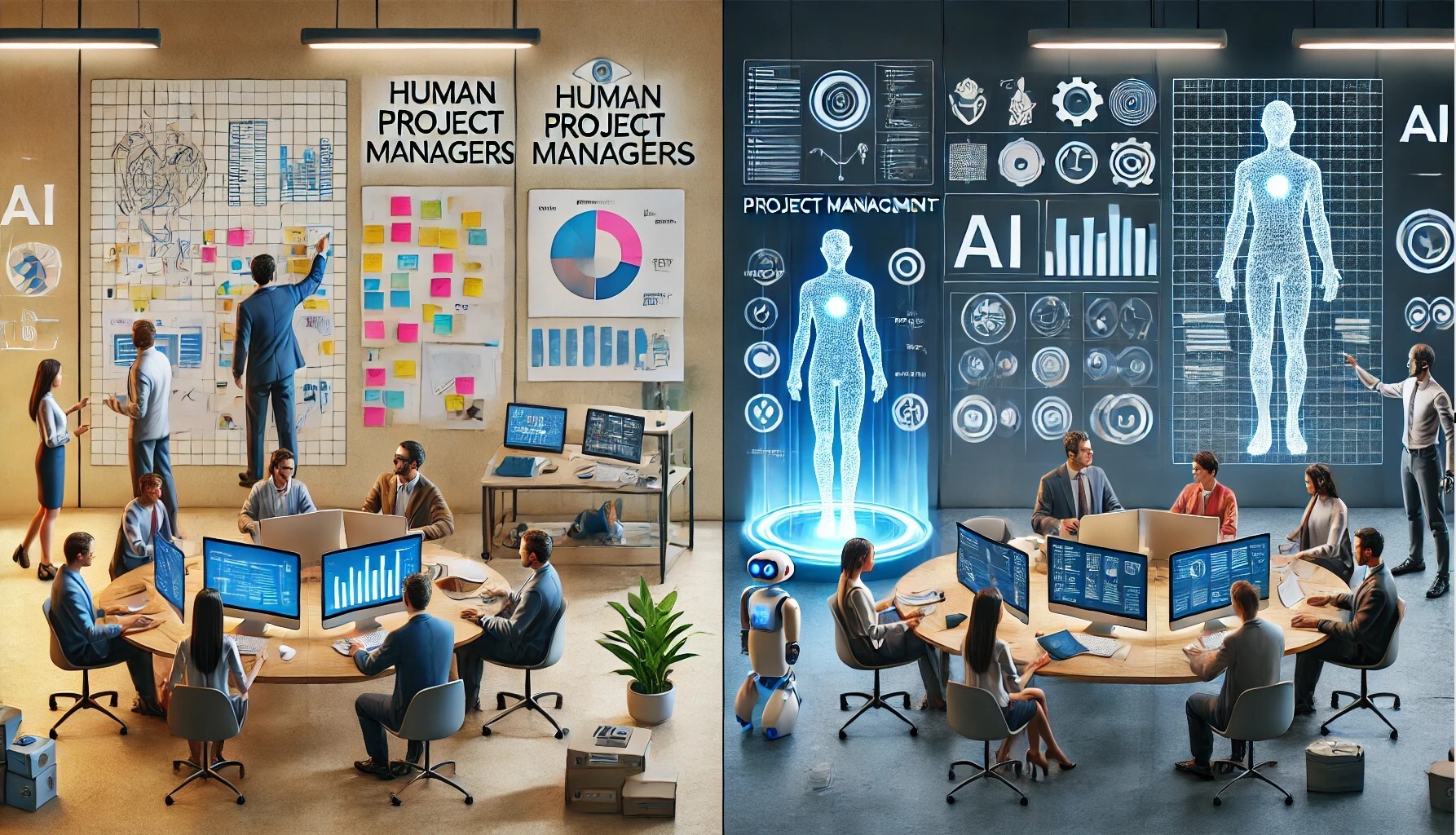
Have you ever wondered if AI is going to replace the role of Project and Product Managers? Before I became a Principal Consultant at AKF, I started my career as a Technology Project Manager and later served as a VP of Project Management and without giving away my age, let’s just say AI wasn’t even on the radar back then.
We simply made decisions based on spreadsheets, Microsoft Project, whiteboards and a good dose of human instinct, collaboration and experience. Everything was about people! People were our source of understanding requirements, working through issues, influencing others, collaborating and ultimately making changes or adaptations when the infamous "scope creep" arrived.
But as we continuously explore and evolve in the AI space, I can certainly understand why it is a valid question and/or concern if humans are still needed in these roles?
However, while AI is efficient at crunching numbers and streamlining processes, it still cannot match the magic of human creativity, intuition, and people skills.
My previous blog explored the many impactful ways AI is transforming how we manage projects and build products faster and smarter https://akfpartners.com/growth-blog/when-ai-joins-the-team-an-ally-for-project-product-managers.
This blog however shifts the focus to the human side, highlighting the skills, qualities, and characteristics that not only keep us relevant in the age of AI, but make us an essential partner in it as Project and Product Managers.
Why Human Leaders Matter More Than Ever in an AI World
AI can certainly optimize workflows, but can it navigate office politics, inspire a team, or sense when a project is about to go off the rails? AI and humans are both very different in what they have to offer but both are very important to successful outcomes, so the best is when both are utilized in the right ways in order to achieve optimal results.
To highlight in a more real-world situation:
• When a key stakeholder is changing their minds frequently, AI can identify and highlight the resource or time impact, but it is a human who needs to prioritize the work and help preserve or rebuild trust.
• When a team member is suffering from burnout, AI may highlight their slowing productivity in a chart, but a human can see that the individual is frustrated and offer some support.
What are some of the key skills Project & Product Managers should have in a world full of AI applications that will help elevate teams, decision making and results?
Listed are not the only skills, but a few that come to mind including:
- Emotional Intelligence & Leadership: Humans have the ability to understand and navigate team dynamics, emotions and morale and work with individuals to resolve conflict and motivate one another.
- Creative Problem-Solving: Humans offer a unique ability to innovate, apply critical thinking and use creative problem-solving strategies to tackle complex challenges AI can’t solve with data alone.
- Ethical Decision-Making & Judgment: AI can make data-driven decisions, but humans are needed to make ethical or moral judgments and deal with any issues that can arise around bias.
- Contextual Understanding: Humans are in the best position to understand the nuance of cultural differences, market shifts or unforeseen events in order to make more effective strategic decisions.
- Stakeholder & Client Relationships: Humans offer the ability to build and manage personal stakeholder/client relationships and offer skills around negotiation and managing up or down.
- Adaptability in Unstructured Environments: AI is very structured and will succeed in a workflow that is standardized. Humans on the other hand can also make decisions and help the team adapt in unstructured or undefined scenarios and in ever changing environments.
- Vision & Long-Term Strategy: AI is about optimizing operations, whereas humans are what drives business strategy and innovation and ensure that operations are aligned with long-term business goals.
Humans + AI - finding the Right Balance in Today’s Project & Product Management World
Finding the ideal blend of AI efficiency and human leadership is key to delivering successful projects and products. While both bring unique strengths, knowing when to rely on each is what creates a high-performing and resilient team while achieving goals.
AI Excels When:
- Tasks are repeatable and structured
- Data is clear, measurable, and available
- Speed and efficiency are the priority
- Workflow automation improves delivery
Human Leadership Delivers the Most Value When:
- Work involves emotions, culture, or trust
- Stakeholder alignment is required
- Ethical or strategic decisions must be made
- The environment is uncertain or rapidly changing
If organizations can aim to achieve that level of AI + human balance and optimization, AI becomes an accelerator and NOT a replacement and Project & Product Managers continue to be the ultimate driving force behind business results.
AI’s Growing Challenges: What Teams Should Prepare For
AI is maturing at a phenomenal pace and a key area of interest that we are all asking is what to expect next in terms of the evolution of AI and what it may mean for our teams and/or our roles? Currently AI can be used to add significant benefits to the Project & Product Management processes, but organizations still face many challenges to use it successfully, efficiently and at scale.
They are constantly working through challenges such as knowing how to get high quality data in the right data pools, overcoming ethical and security concerns, pushing back on regulatory and compliance needs as well as change and technology adoption in the workforce.
What does this mean for your teams and/or your roles today? Here are some ideas of what to consider:
- Dependence on the quality and accuracy of data: AI systems need high-quality and unbiased data to function optimally.
- Ethical concerns, transparency and bias: Ensuring AI algorithms are fair, transparent and unbiased is a key challenge.
- Resistance to change among teams and employees: Fear of job loss may make some employees resist AI adoption.
- Reliance on AI for decision-making: Managers may become overly dependent on AI, potentially overlooking human judgment.
- Skill gaps in AI management and governance: Organizations need skilled personnel to manage AI initiatives and address data bias and security challenges.
Overall, AI adoption does come with some caveats and human intervention and oversight is still required to help navigate these, so organizations that proactively plan and invest in addressing these challenges will be the ones to gain an edge in the long term.
Human-AI Collaboration Skills and Next Steps
In the future, AI may take on more of the task work such as status reporting, backlog grooming recommendations, risk prediction. Project and Product Managers will increasingly serve as strategic integrators, relationship builders, and drivers of organizational alignment.
The more AI takes on, Project & Product Managers will be able to shift into more of a strategic integrator and relationship building role, working with people from across the business and enabling organizational alignment.
Therefore, in order for Project & Product Managers to work most effectively with AI, there are some skills that should be considered for development and success such as:
• Prompt design & fluency with AI tools and features: Crafting effective prompts and understanding AI features ensures you get accurate, useful responses instead of noise or rework.
• Sensemaking — the ability to interpret AI insights within a context: AI can surface patterns, but humans must interpret what those insights mean for the business and make informed decisions.
• Influencing and negotiation skills: AI can recommend actions, but humans still need to align stakeholders, resolve conflicts, and build consensus.
• Cross-functional communication and coordination: AI supports execution, but humans must connect teams, translate insights, and keep everyone moving together.
• Ethical and responsible technology decision making: Humans must evaluate potential bias, fairness, and impact to ensure AI-driven decisions remain responsible and transparent.
As an organization also remember to Assess, Experiment and Invest:
• Assess workflows to identify areas that could benefit from AI augmentation: PMs should understand where AI can improve speed or quality and where human involvement remains essential.
• Experiment with available AI tools like Jira AI, Notion AI, Click-Up AI, etc.,: Hands-on experimentation helps PMs understand capabilities, limitations, and practical use cases.
• Invest in Emotional and/or Leadership development: Emotional intelligence and leadership skills remain uniquely human strengths and are critical for guiding teams through change and fostering trust.
In Conclusion Humans and AI: The Dream Team of Project & Product Management
AI is revolutionizing Project and Product Management, providing businesses with powerful tools to streamline workflows, mitigate risks, and enhance decision-making. While challenges such as data quality, ethics, and adoption remain, organizations that embrace AI responsibly can unlock tremendous potential.
However, despite AI’s growing capabilities, human Project & Product Managers remain irreplaceable due to their leadership, creativity, ethical judgment, and adaptability. The most successful businesses will be those that find the right balance between AI-driven efficiency and human-centered strategy.
As AI continues to evolve, staying ahead of the curve is key. By leveraging AI strategically while empowering human managers, businesses can drive innovation, improve efficiency, address customer needs and maintain a competitive edge in an increasingly AI-driven world.
If your organization needs assistance with AI strategies in Project and Product Management, please Contact Us we can help!